
Cut Your Budget Even When You Think You Can’t!


What can you do to cut your budget?  This is one of the common questions I hear from readers.  You’ve already done everything you can, but it still does not work.

I remember when my husband and I were struggling after I quit my job to stay home with our first born.  It was tough and we all know you can’t get blood from a turnip!

Before you look at what you can do to save on your budget, you need to make sure you have one.  Your budget needs to be in writing. It needs to be a roadmap showing you where you will spend your money.

Here are some different things we tried, which you can use too when you need to cut your budget:

1.  Find ways to bring in more money each month.

Of course, you can’t give yourself a raise at your job, but there are other things you can do to bring in more money.  We ended up selling items, I found a part-time, work from home job with my prior employer and eventually, started this site.   You sometimes need to look inside and where your passion lies and you might find the perfect way to increase your income.  Just a bit more money can really help your budget every month.

2.  Don’t be so hard on yourself.

Sit back for a minute and look at where you were before you knew about budgeting and stretching your dollar vs. where you are now.  Be proud of what you’ve done and the changes you’ve made.  Sometimes, just knowing that you’ve made positive financial changes is enough to be proud about.  Just celebrate the small victories.

3.  Don’t compare yourself to others.

This is a tough one.  You may see others who claim that they found a way to shave their budget by hundreds of dollars every month.  While we would all love to be able to do that, it may not be realistic for you.  You may have additional expenses others do not have.  Your income is different than them.  You have your own financial goals.  When you stop comparing yourself to others, the need to keep up and compete will stop and you can feel better about your own budget.

4.  Look at your needs vs. wants.

This is a tough one.  There are probably things you have in your life which are wants rather than needs (and vice versa).  Do you have both a land line and cell phone?  If so, do you need both or do you want both?  Why not drop the land line?

Take a look at your entertainment.  Do you need cable?  Why not try to use another way to knock down your cable bill (or eliminate it completely).  Do you need to eat dinner out once a week – or do you want to dine out?

When we were getting out of debt, we did not eat in a restaurant for more than a year.  I kid you not.  It was tough, but we survived.  The reason was that we determined that it was a want to dine out and not a need.  Instead, we took the money we would have spent having a dinner out and used it towards our debt instead.
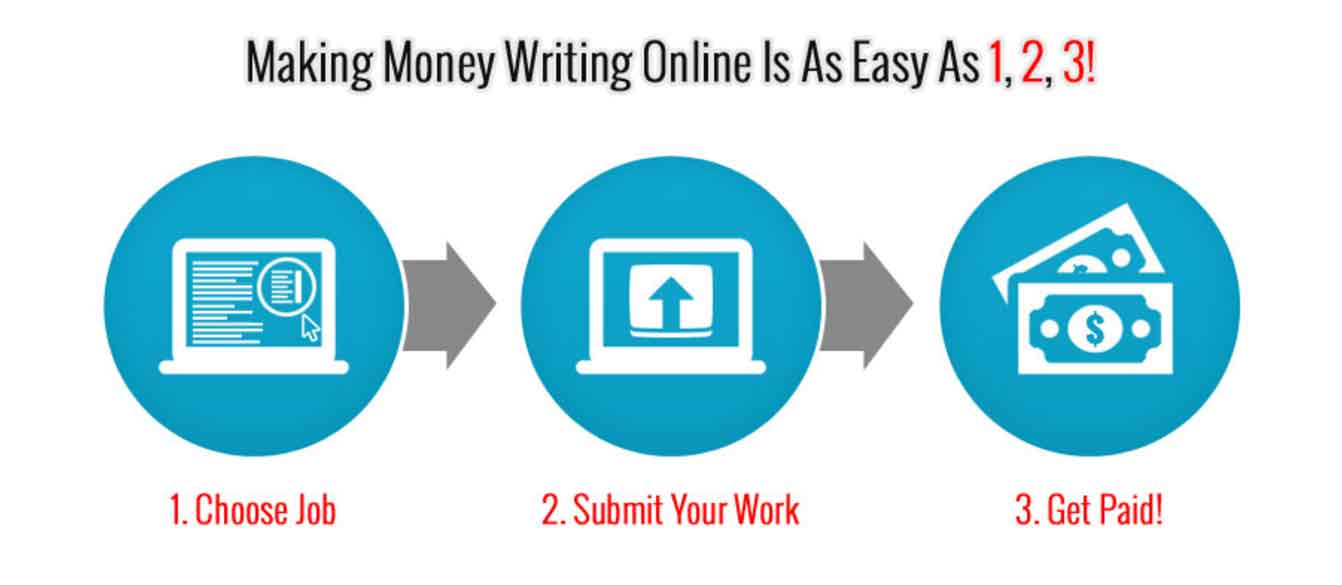

Write Online And Get Paid! Infographic

Yes! I want more information!

5.  Seek assistance.

This may be the time when you need to reach out to get help.  There are times when you just can’t make it on your own and there are programs and services which are here to help.  You can check with your local government to find ways to get help with utility bills, apply for food stamps, locate a food pantry and even get assistance for child care.


Just because you ask for help does not mean you are not financially responsible.  We all have times when we need a hand and these organizations are here to help.  Once you get back on your feet, then that will be your chance to pay it forward to help someone else.

6.  Cut your spending.

This may seem simple, but you can do simple things to reduce your spending at the store.  You can switch from name brands to store brands.

Start to use coupons!  While you may not find them for the fruits, vegetables and meats you need, you can find them for the household products you use and many other products around your house.  Combine these with sales to ensure you pay the lowest price possible.

You might also consider changing where you shop.  One idea is to shop at Aldi.  If you live near one of these locations, you can easily cut your spending by nearly 50% just by shopping here!
7.  Use Cash.

I know it sounds crazy, but it works.  When you use cash for your discretionary spending you can never overspend.  So, if you need to lower your grocery spending, the simple way to ensure you do not overspend is to get cash.

Cash is defined and when it is gone, it’s gone. It is a simple tool that you can use to ensure that you always stay on budget and help keep your spending in check.

If your budget is not working, then it is time to make some big moves. It will not be fun. It will not be easy. But it is something you just have to do.

10 Brand New Ideas for Making Money on the Side…

Make Money Online Infographic

While there proven ways to make extra cash on the side, even if you have a full-time job, if those haven’t worked-out for you in years past, then consider these 10 new ideas for earning some additional money on the side.

1. Join the sharing economy.

“The sharing economy is growing at an exponential rate,” says Nigel Wilson, managing director at Hitwise. “Thousands of sharing economy companies have sprouted up around the world, and consumers are actively engaging in collaborative consumption.

According to PwC, 44 percent of all adults in the U.S. are aware of the sharing economy and 19 percent have engaged in a sharing economy transaction. It is imperative for brands to consider how to support and participate in collaborative consumption, rather than compete against it.”

The sharing economy is exploding and the largest demographic in the country, millennials, have embraced it. For 2017, look beyond Uber, Lyft and AirBnb when looking to tap into this market. You can rent out your car on Turo, camera equipment on Cameralends, snowboard or bike on Spinlister and, if you own one, your sailboat on Sailo. Besides renting out the stuff that you already own, you can deliver home-cooked meals with Umi-Kitchen.

2. Launch a box subscription service.

If you want to tap your local or niche market then a box subscription service is the place to start. Over the last couple of years we’ve seen an explosion of box subscription services in niches ranging from beauty to food to gaming to novelty gifts. Since the goods or services are delivered to the customer each month, and it has a recurring billing model, it can quickly become a lucrative and passive source of income. Here’s a list of possible box service ideas to get you started.


3. Take over a mobile food truck.

More and more people, especially those between the ages of 18 to 34, are patronizing food trucks and that’s why the food truck industry is expected to surpass $985 million by 2019. For savvy entrepreneurs, food trucks are an appealing business because it’s inexpensive to start, isn’t strapped down to a one location, can be a part-time side gig and you don’t have to start from scratch. Every day thousands of baby boomers retire. If you know any baby boomer looking to get out of the food industry, consider purchasing their established business, which should include customers, recipes, and equipment at the very least.

My friend Keith Crossley was able to purchase several food trucks and recently opened several restaurants. It took him almost four years but over that time he was able to build a thriving business for himself. It all started trying to make money on the side and turned into his full time thriving business. It’s possible for you to do the same. His original investment was less than $35,000.

4. Earn cash by downloading apps.

I’ll be honest, you aren’t going to make a fortune downloading the following apps but you can make some extra cash each month by doing very little. Here’s some of my personal favorites:

  • The Swagbucks app pays you for answering simple survey questions.
  • Media Insiders pays you for watching television.
  • Stash gives you $5 to start investing.
  • Clink will give you $5 to start saving
  • When you walk, Bitwalking will pay you in a virtual currency called Bitwalking Dollars.
  • Nielsen Homescan gives you cash for scanning your grocery receipts.
  • Achievement pays you for completing healthy activities.
  • MobileXpression will give you cash, gift cards, and merchandise for surfing online.
  • The Ibotta app pays you for taking pics of your receipts.
  • Paribus scans your emails for receipts and will issue a refund if there’s a price drop.

5 Write to Congress.

Writing has long been a favorite side-gig for people. However, with the 2016 presidential election, don’t be surprised to see an influx of letters to Congress. And, you may be able cash-in on this trend. DDC Public Affairs and NextWave are bipartisan advocacy groups that launch grassroots political campaigns on issues ranging from energy, healthcare, taxes, and defense.

All of these hire people to call all constituents or advocates and then transfer their opinions into written letters. You’re assigned campaigns, but you can reject them if you want. They expect you to work 20-25 hours per week and you start-off at $12 to $15 per hour.

6. Invest in real estate.

If you aren’t working full-time or are already strapped for cash, then becoming a landlord probably isn’t the wisest decision. But, if you’re looking to make some extra cash, then you could consider invest in real estate. The reason? The housing market is looking strong for the foreseeable future.

Best of all, sites like Realty Mogul allow you to invest in commercial real estate for as little as $5,000.

7. Become an Instagram consultant.

Instagram had an incredible 2016. And, expect 2017 to be even better. Thanks to the Facebook-owned platform getting serious about attracting businesses, and launching exciting features like live video and Instagram Stories, a lot of brands are going to start promoting themselves on ‘the gram.’ If you’re a frequent Instagram user, have a passion for photography, and are a social media whiz, then you can start your own Instagram consulting business on-the-side.

Guy on computer making money

8. EMV security consultant.

There are now around 300 million chip-card in-use by consumers with 1.2 million merchants accepting chip cards. Even though the transition to EMV is in full-swing, it’s expected that there will be an increase in fraud.

If you have security experience, or are knowledgeable in EMV, then you could start your own EMV security consulting business where you can instruct small business owners and their employees how to properly use EMV readers and inform them on the latest security measures.

9. Invest in bitcoin.

Bitcoin had a very good 2016. That should carry over into 2017 and beyond. In fact, some experts believe that the price for bitcoin will reach $1,000 within the next year, which would be a 40 percent increase. This is because of an increase in usage, more adoption, an increase in investments, and remittance in emerging markets like India.

10. Go green.

Millennials are extremely conscious about the environment. For example, 61 percent of millennials want to sign up for a digital application which can allow them to track their energy usage and control their household climate. That means that there’s a huge demand for “green” businesses in the near future.

Three-quarters of Americans are stressed about this…

Almost three-quarters of Americans are experiencing financial stress at least some of the time, and nearly a quarter of us are experiencing extreme financial stress, according to a study released today by the American Psychological Association.

Overall stress levels have been declining since the association published its first annual stress survey in 2007. But underneath that larger trend, disturbing patterns are emerging.

Widening Gap

For one thing, there is a widening gap in stress levels between low-income and higher-income Americans.

People with incomes under $50,000 and with incomes over $50,000 reported comparable overall stress levels in 2007, at 6.2 on a 10- point scale (where 10 represents extreme stress.) While overall stress levels were lower in 2014, the wealthier group reported overall stress levels of 4.7 and the lower-income group reported a 5.2 stress level, the widest that gap has been.

“Until very recently, with things looking better, wages have been stagnant. When your cost of living continues to increase and your wages don’t keep up, the impact of that is disproportionate,” said Katherine Nordal, executive director for professional practice at the American Psychological Association. “Those of us who are fortunate enough to be in the $50,000-plus category, we have more options or discretion about how we spend money, for the most part.”

Money stress and health

Higher financial stress levels have worrisome health implications, according to the report, which is titled “Paying With Our Health.” Lower-income Americans reporting financial stress of 8 or more on a 10-point scale are distinctly more likely than lower-income Americans with low financial stress to spend excessive time watching TV or surfing the Internet, and they are more than twice as likely to overeat, drink or smoke.

Americans with high levels of financial stress may be harming their health in other ways too. Some 12 percent of respondents said they had skipped going to the doctor at some point in the past year because of financial pressures, and 9 percent had considered doing so. Almost a third of the respondents said their financial situation prevented them from living a healthy lifestyle.


Those behaviors will have a major impact on the long-term health of those stressed-out Americans, Nordal said. “About 40 percent of health-care outcomes are driven by individual behaviors,” she said, much more than the 10 percent attributable to the quality of medical care.

Financial Stress Information

Support cuts stress

The American Psychological Association report follows a poll published last July that also pointed to the toll that financial stress takes. In that poll, by the Harvard School of Public Health, the Robert Wood Johnson Foundation and NPR, 53 percent of respondents who experienced a great deal of stress in the last month said financial problems were a factor.

There is a glimmer of positive news in the report. “For those Americans who feel the burden of stress about money the most—parents, younger generations, lower-income households and women—it seems that emotional support is even harder to come by,” the survey found.

But respondents who reported having an emotional support system reported markedly lower stress levels, at 4.8 on a 10-point scale, than people without support, who reported stress levels averaging 6.2. (The American Psychological Association provides tips for managing financial stress.)

Look to your left. Look to your right. One of you will have financial stress this year, so lend a hand.

Ways to Make Money Blogging

Blogging tips

If you want to make money blogging, then you’ll be happy to hear that it is not that hard to do. Of course, the amount of money you make depends entirely on your ongoing efforts to publish a great blog, grow your audience, and continually test new money making opportunities in order to find the best ways to match your audience’s expectations for your blog and your own goals for your blog.  With that in mind, check out these fairly easy ways to starting making money from your blogging efforts.

There are many advertising programs available for bloggers to join.  One of the most popular online advertising programs and possibly the easiest to set up on your blog is Google AdSense, which offers a variety of pay-per-click text, display, and video advertising opportunities for bloggers. With a bit of effort, experimenting, and tweaking you can definitely make some money with Google AdSense.

Join an Affiliate Advertising Program

There are many companies that offer programs that enable you to sign up as an affiliate of that company and earn money. Amazon Associates is one of the most popular and easiest affiliate advertising programs for bloggers to use.

Join an Affiliate Advertising Network

There are a number of affiliate advertising networks that link online advertisers with publishers (such as bloggers). Commission Junction is one of the most popular affiliate advertising networks.

Sell Your Own Ad Space Directly to Advertisers

You can attempt to sell your own ad space directly to advertisers, but unless your blog is established with a sizable audience, it can be difficult to manage and make money selling ad space directly.  Fortunately, there are sites like BuySellAds.com that link online publishers (like bloggers) up with online advertisers to make selling your ad space easier.

You can write blog posts on your own blog in exchange for pay, and there are several Web sites that link online publishers (such as bloggers) up with companies and individuals who want their products and services reviewed or discussed online. Just be sure to understand how to safely publish a paid post or sponsored review on your blog, so you don’t negatively affect your blog’s traffic.

There are a number of Web sites that make it extremely easy for bloggers to create their own online stores where you can sell custom or stock merchandise and make money doing it! CafePress, Zazzle, and Printfection are three of the most popular sites for creating your own online store.

Become a Professional Blogger

If you write well and can work autonomously, then you could work from home as a professional blogger!  Fortunately, there are many sites where you can search for paid blogging jobs. Keep in mind, blogger pay rates can vary drastically, so make sure any opportunity you take matches your long-term blogging goals.

Blogging Guru Blueprint

Join a Blogging Network

There are a number of blog networks that include a number of blogs and bloggers all publishing under a larger brand or company. Many of these blog networks pay bloggers a flat fee per post or word that the blogger writes or the blogger receives a percentage of advertising earnings tied to the number of page views his or her posts generate (some networks even pay both a flat fee and a percentage of advertising revenues). As always, make sure the opportunities you pursue match your long-term blogging goals.

Ask for Donations

While you’re unlikely to make much money from donors, it certainly can’t hurt to ask for donations on your blog. It’s easy to add a PayPal donate button, and you never know who might be feeling generous!

There are a variety of ways that you can make money from your blog without publishing any ads on your blog at all. Don’t be afraid to get creative!

Top 10 Financial Freedom Self-Help Books

There are numerous informative and well-written books that can help you with financial management. Here is a look at the ten top finance books you should have on your shelf.

1. The Millionaire Next Door by Stanley and Danko

Based on an extensive research on the spending habits of millionaires, this book tells you how to earn and save money. The book discusses ‘next door’ millionaires, who have worked their way to riches in less than glamorous businesses such as pest-control services, rice-farming, contracting and planning weddings etc.

What separates them from today’s millionaires is their lifestyle and spending habits. These businessmen value their money, invest a minimum of 20% from their incomes and don’t spend extravagantly on clothes or accessories. This book also teaches you how to plan a budget and stick to it.

2. The Automatic Millionaire by David Bach

This book tells you how to plan your finances using simple common sense. You can learn to make a better use of available financial tools to earn more money. The idea given by the author is about automating your finances by changing your spending habits and making wise investments. The “Latte Factor” that he discusses in the book tells you how you can save money for a financially secure life post retirement by making a commitment to reduce debts and cutting down unnecessary expenditure on cigarettes and lattes.

3. The 4-Hour Workweek by Timothy Ferriss

The 4-Hour Workweek is about the “New Rich”, who speed up their retirement plans to start living their dreams now, when they are younger. It is an easy-to-read book offering practical tips on how to work for just 4 hours a week and use the remaining time to do all that you want to.

If you are an employee, you can use the ideas in the book to negotiate a work-from-home arrangement with your employer, or plan a ‘mini’ retirement every year. The book provides a lot of ways on how you can outsource your business to enjoy the mobility and freedom to work from anywhere you want. The main point the author drives home is about spending less time to earn money and more time on pursuing your dreams.

4. Your Money or Your Life by Joe Dominguez and Vicki Robin

Your Money or Your Life offers a different approach to money management. Like The 4-Hour Workweek, this book also talks about the importance of pursuing your dreams. It discusses how to manage your money and time to spend more time on doing what you like to do and less on what you don’t. It gives you specific tips on monitoring your spending habits, identifying exactly what you want to do and contributing money towards achieving your goals.

5. Yes, You Can… Achieve Financial Independence by James E. Stowers

Written by the founder of Twentieth Century Mutual Funds, this book offers you basic finance lessons and teaches you the concept of investment using illustrative cartoons and images. To understand what kind of mutual funds can get you better returns and to make the most of your mutual funds investments, read this entertaining, informative book.

6. Secrets of the Millionaire Mind by T. Harv Eker

In ‘Secrets of The Millionaire Mind’, the author focuses on your subconscious thoughts and believes that you cultivate your monetary habits right from the day you are born. He writes, in a humorous way, that you are rich or poor based on how you imagine yourself to be.

According to him, thoughts that make you feel you are not good enough to have money or that you will remain poor because of your ancestry are small thoughts that the poor have whereas the rich are committed to creating wealth and optimistic about their finances. The point that the author, Harv Eker, wants to stress on is that your mind should be ‘set’ on success if you want to achieve anything in life.

7. You Call the Shots by Cameron Johnson

‘You Call the Shots’ is a book for young entrepreneurs who want to learn all about personal finance and entrepreneurship. This book is for anyone who has a passion for life and is committed to pursuing their dreams. A successful young entrepreneur himself, the author’s story tells you that the best way to achieve what you want in life and enjoy incredible success is by being an entrepreneur, who calls all the shots.

Cameron believes that with the internet making it easy to start and develop a business, you don’t have to work for an employer. He also gives you a thorough sketch of the strategies necessary to remove obstacles in your path and taste entrepreneurial success.

8. The Total Money Makeover by Dave Ramsey

The author of this book, Dave Ramsey, compels you to look at rather extreme measures to remove all your debts. He tries to break the myths created by the credit industry and provides something known as ‘the debt snowball’ to solve your debt problems. If you are motivated to live a debt-free life, it may be wise to listen to what the author, who has a personal finance empire, has to say. The author tells you exactly what to do when you are free from debt and when is the right time to invest money. Though the book may be all about managing your debts, it is also a great motivator, encouraging you to stay debt-free.

9. Rich Dad, Poor Dad by Robert T. Kiyosaki

The book tells you how you can achieve financial independence and make money through investments, real estate and other earning strategies. The ‘rich dad’ and ‘poor dad’ discussed in this book have different approaches to wealth creation and spending. The book simplifies the complex world of finance by illustratively explaining the flow of money from your source of income towards your expenditure. It advocates that whether you become rich or poor depends on the way you spend your money.

10. What Color is Your Piggy Bank? by Adelia Cellini Linecker

A small and easy to understand financial guide for kids who want to learn all about money and financing, this book is filled with fundamental lessons for kids aged between 10 and 14. It gives wonderful ideas to kids about identifying a passion or interest, like party planning or after-school arts and crafts lessons, which they can take up to earn some cash. The author has kept the chapters short and the content straight-forward catering well to her young readers.

These top 10 finance books not only offer a great reading experience, but also provide valuable financial advice. See if you can find these books at your local library or buy one that seems interesting from the above list from a bookstore.